France June 2016 - Hotel D'Invalides
Now this is something I was looking forward to visiting very much: the Hôtel des Invalides. It's basically the French War Museum. The tomb of Napoleon and other famous French military heroes are here too.
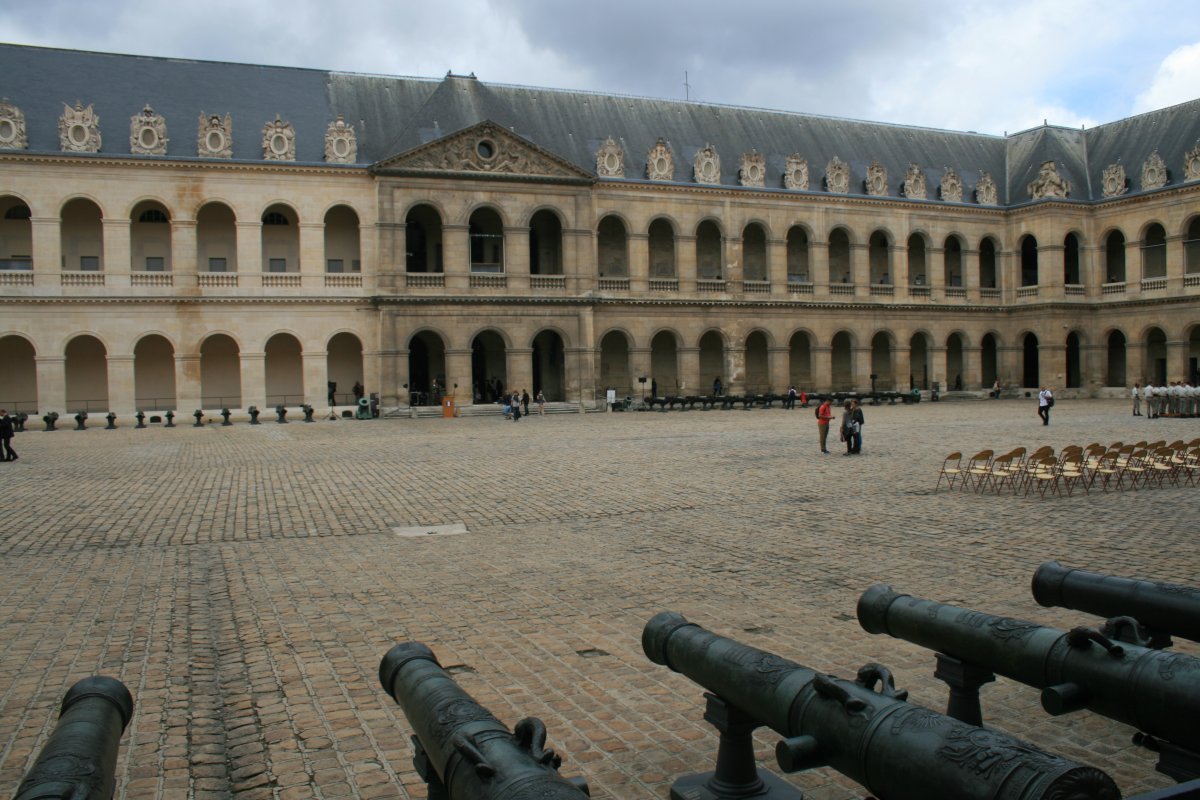
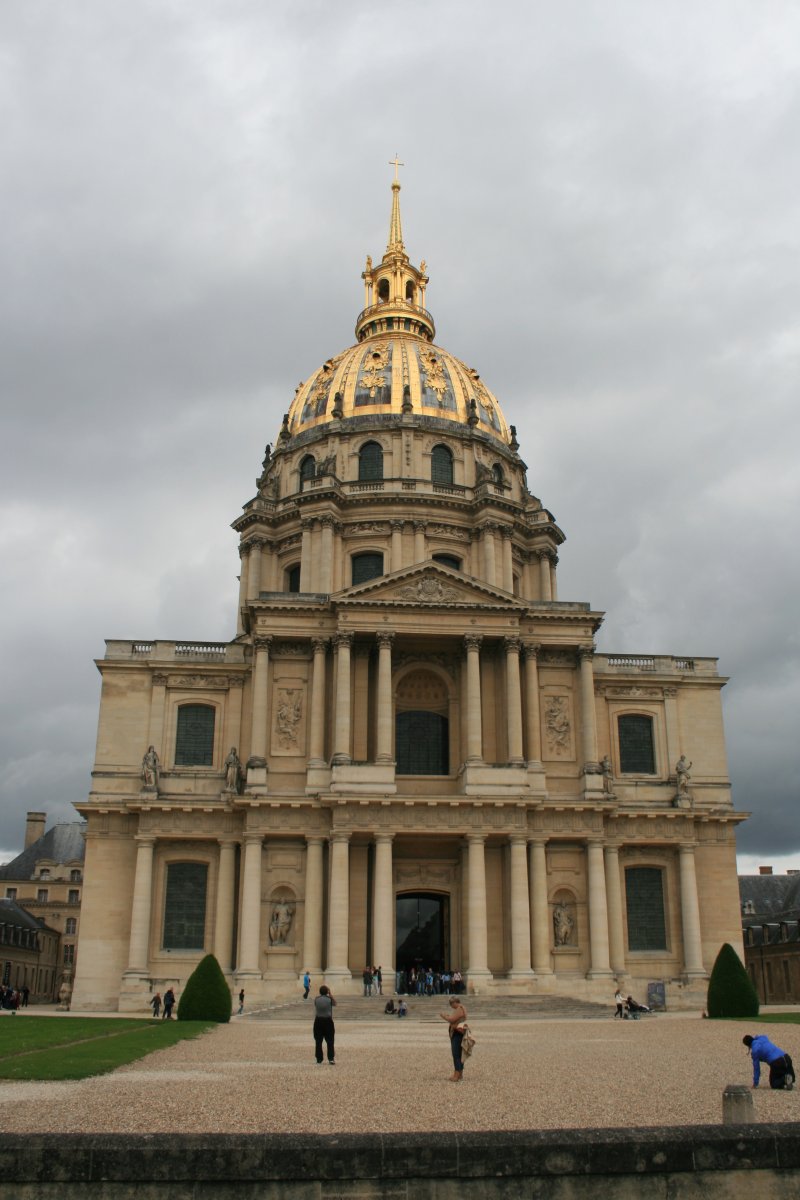
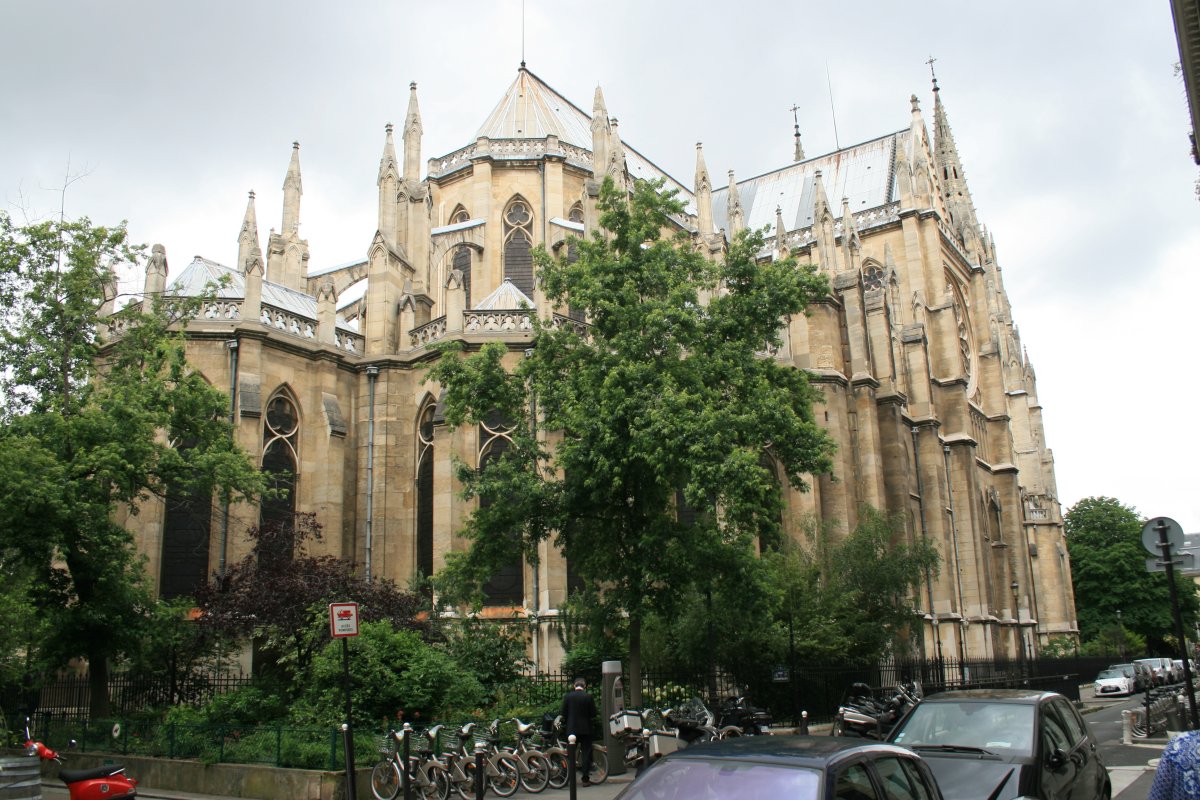
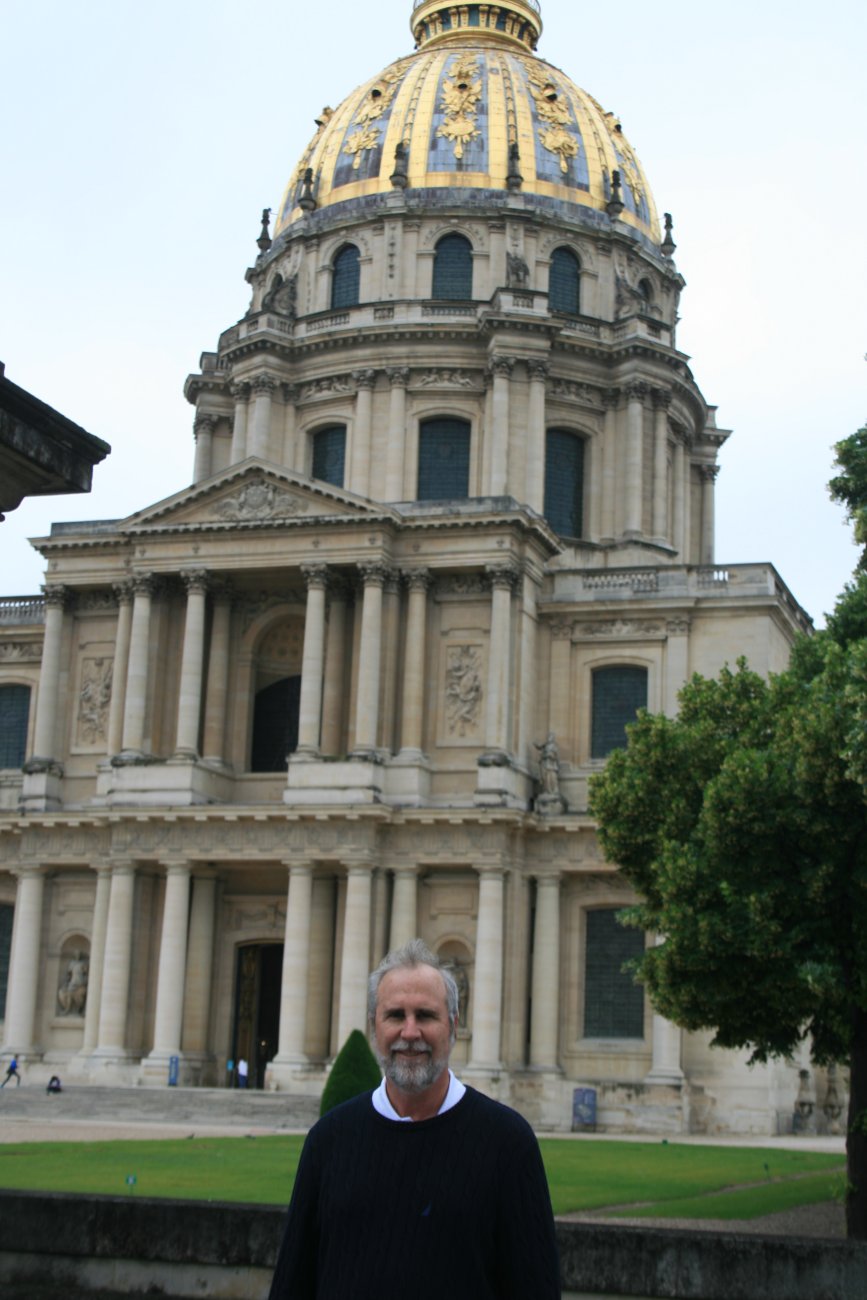
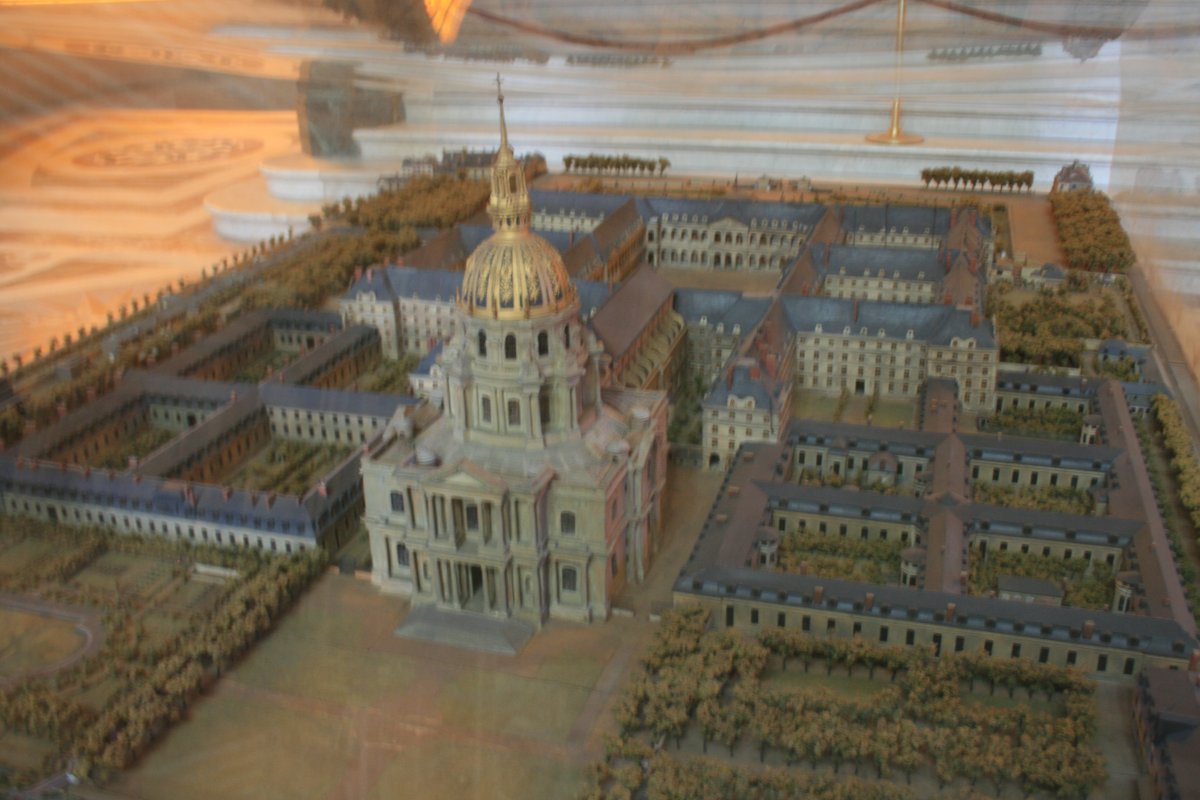
This is the north side of the Hotel des Invalides complex, but the entrance was on the other, south side of this very large building.
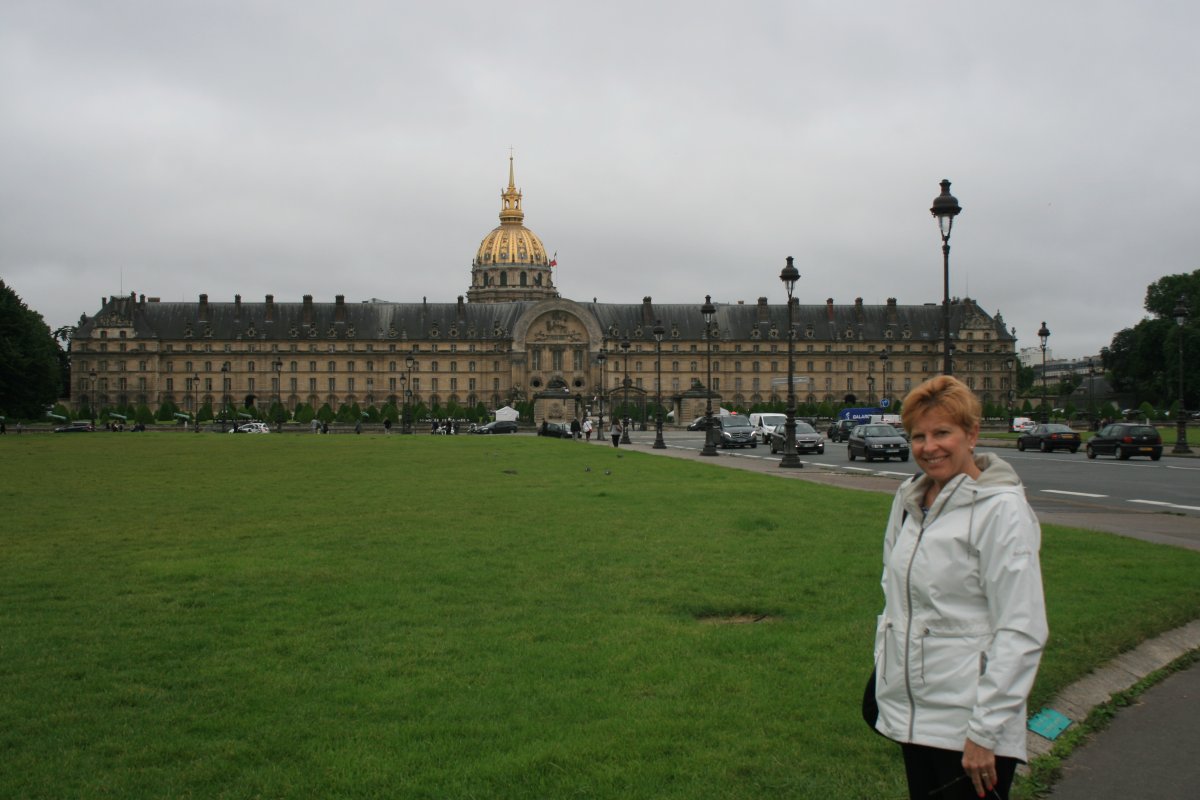
On the north front of Les Invalides, Hardouin-Mansart's chapel dome is large enough to dominate the long façade, yet harmonizes with Bruant's door under an arched pediment. To the north, the courtyard (cour d'honneur) is extended by a wide public esplanade (Esplanade des Invalides) where the embassies of Austria and Finland are neighbors of the French Ministry of Foreign Affairs, all forming one of the grand open spaces in the heart of Paris.
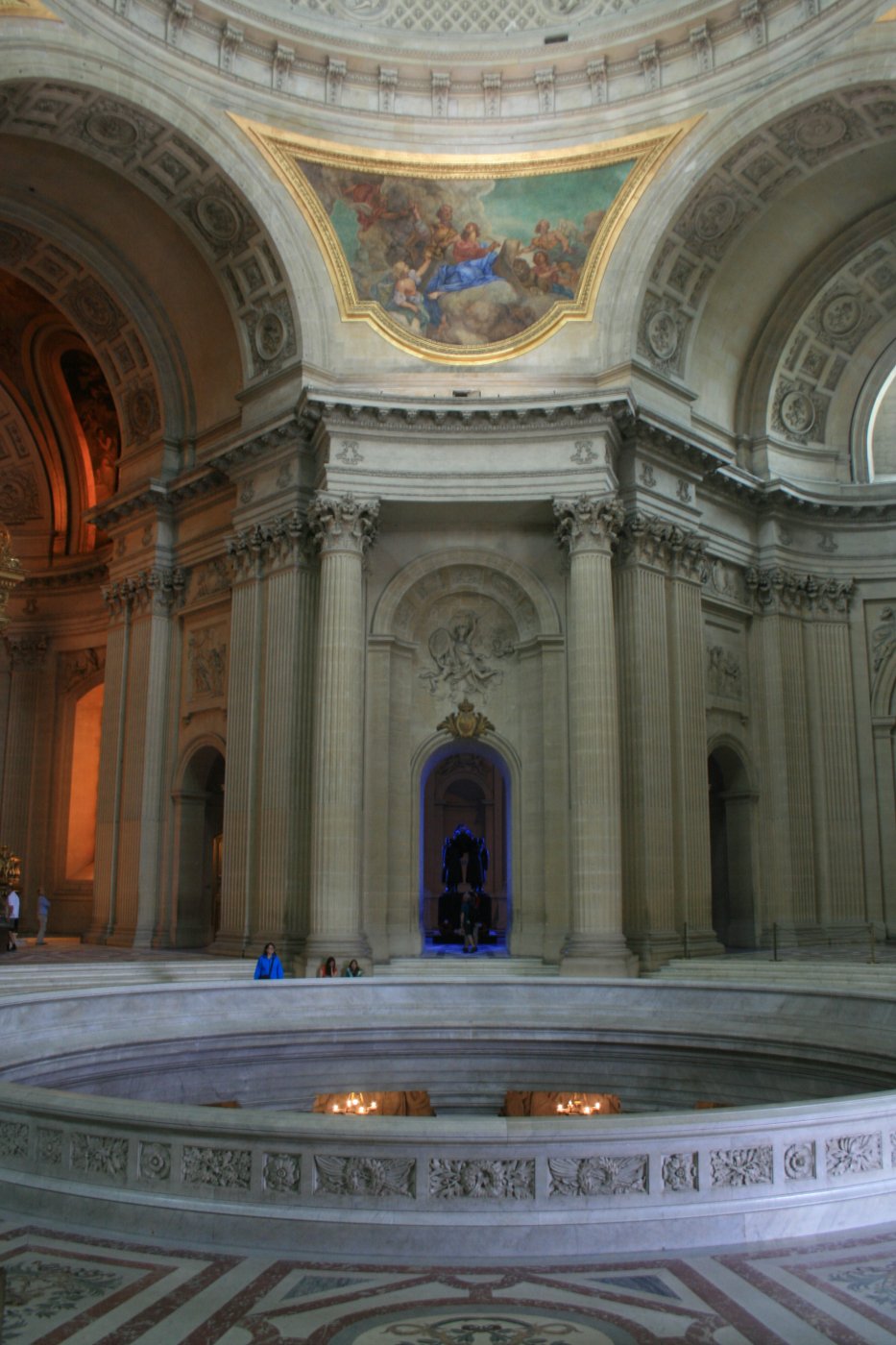
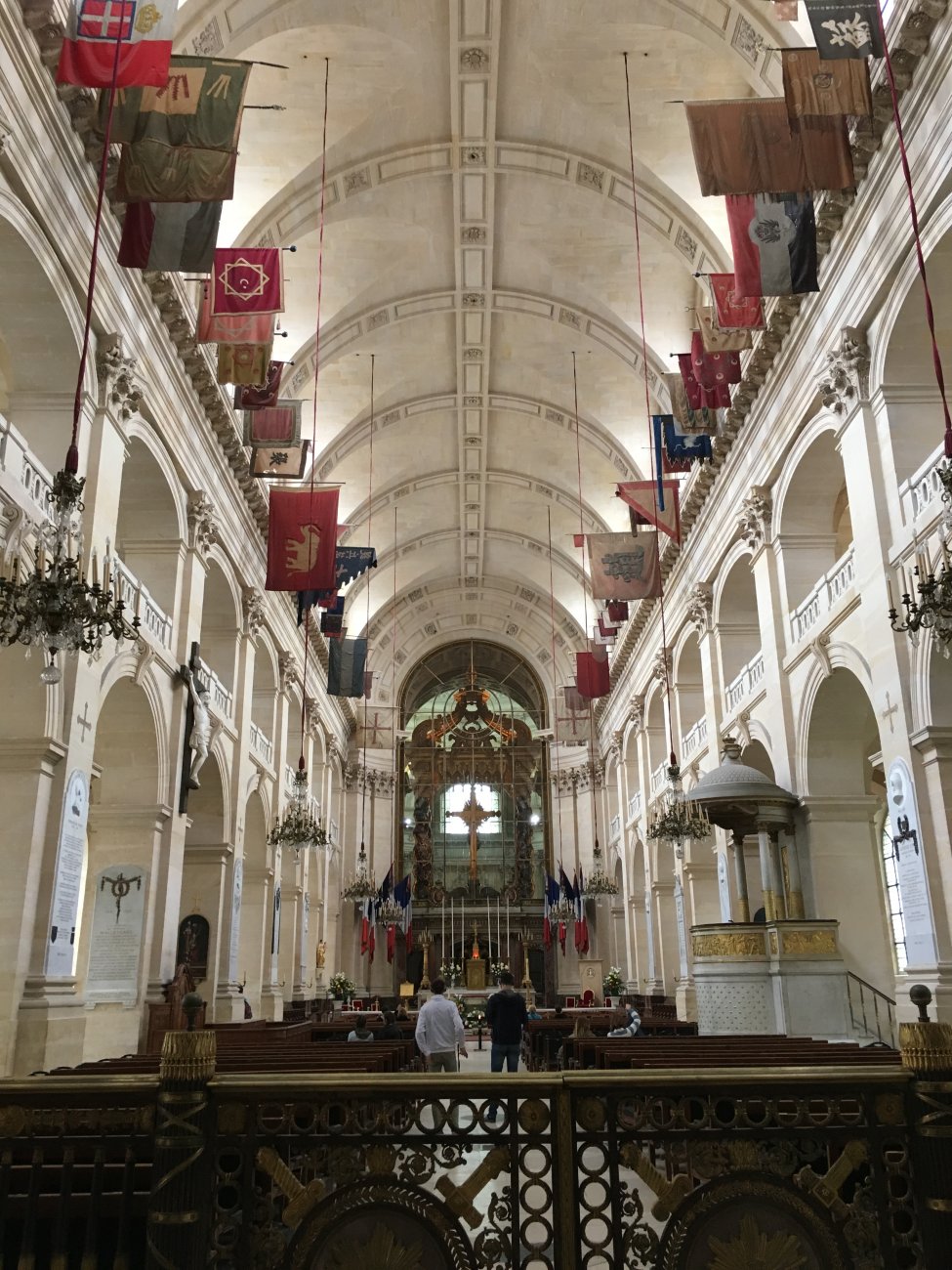
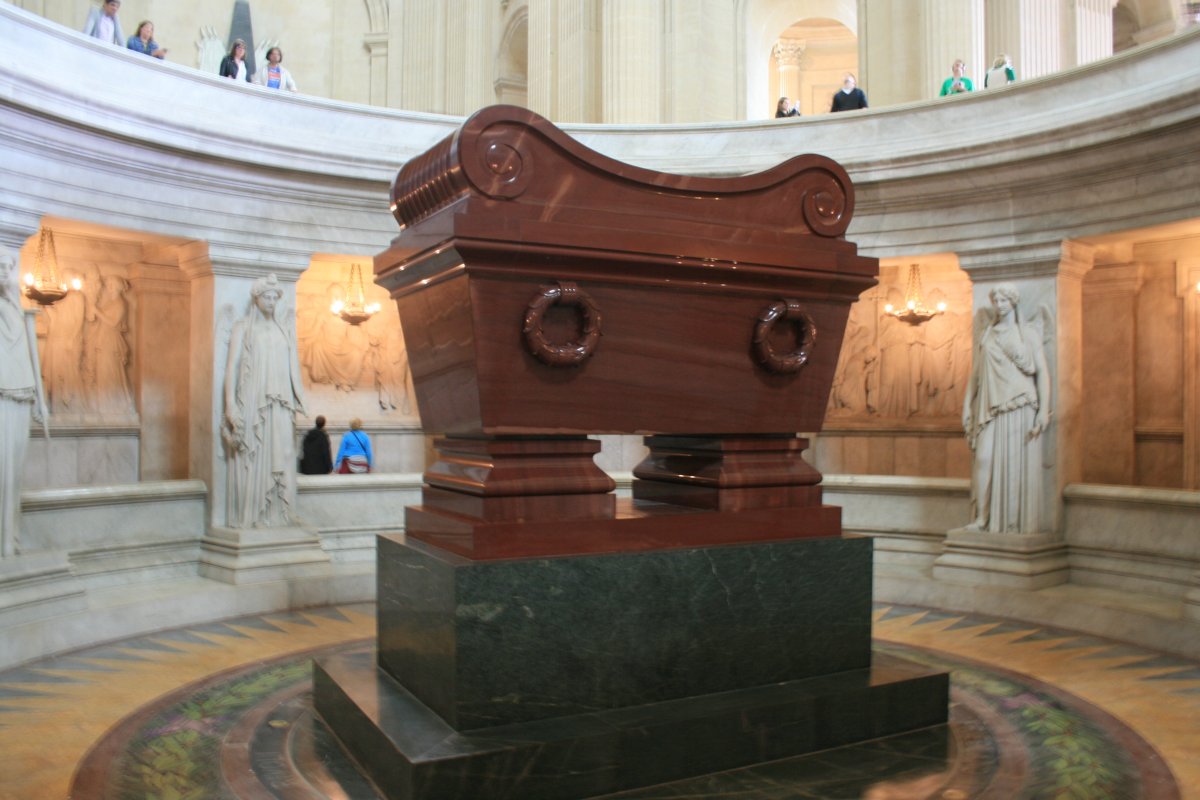
Looking down, there it is: the tomb of the great man, Napoleon.
For a short but fascinating biography, read Paul Johnson's Napoleon.
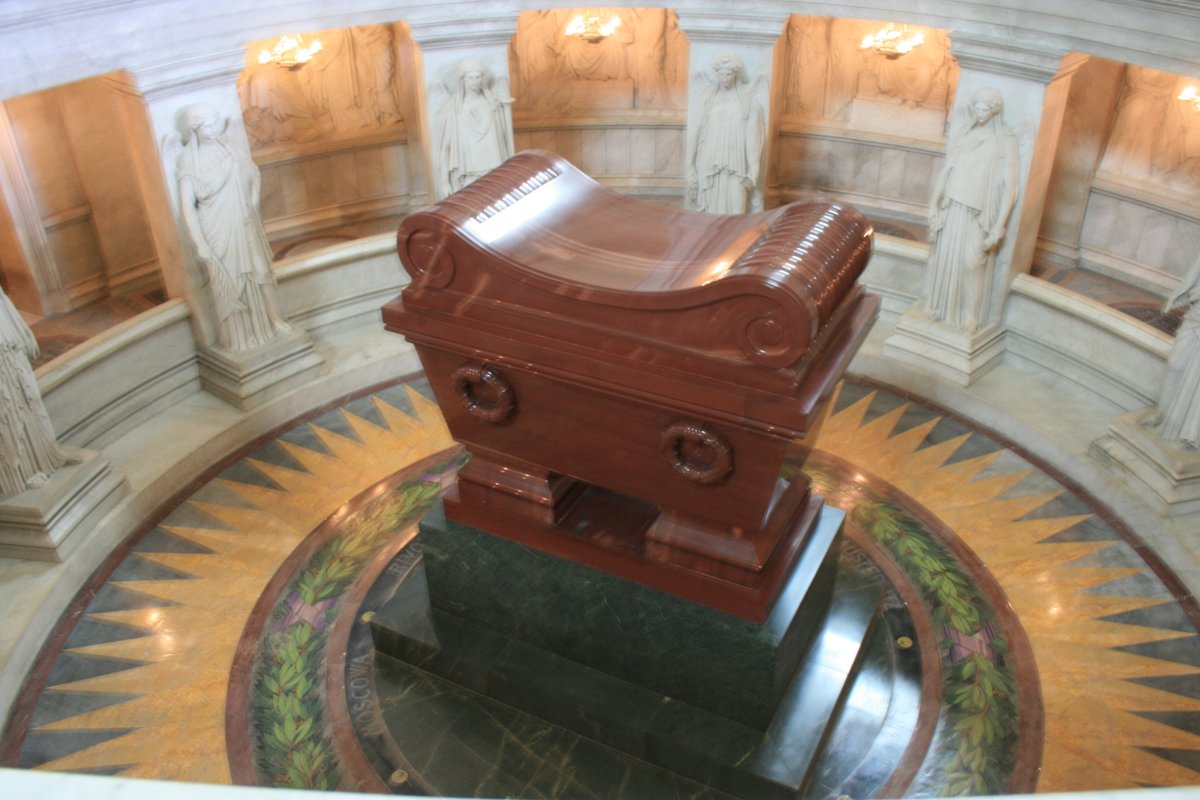
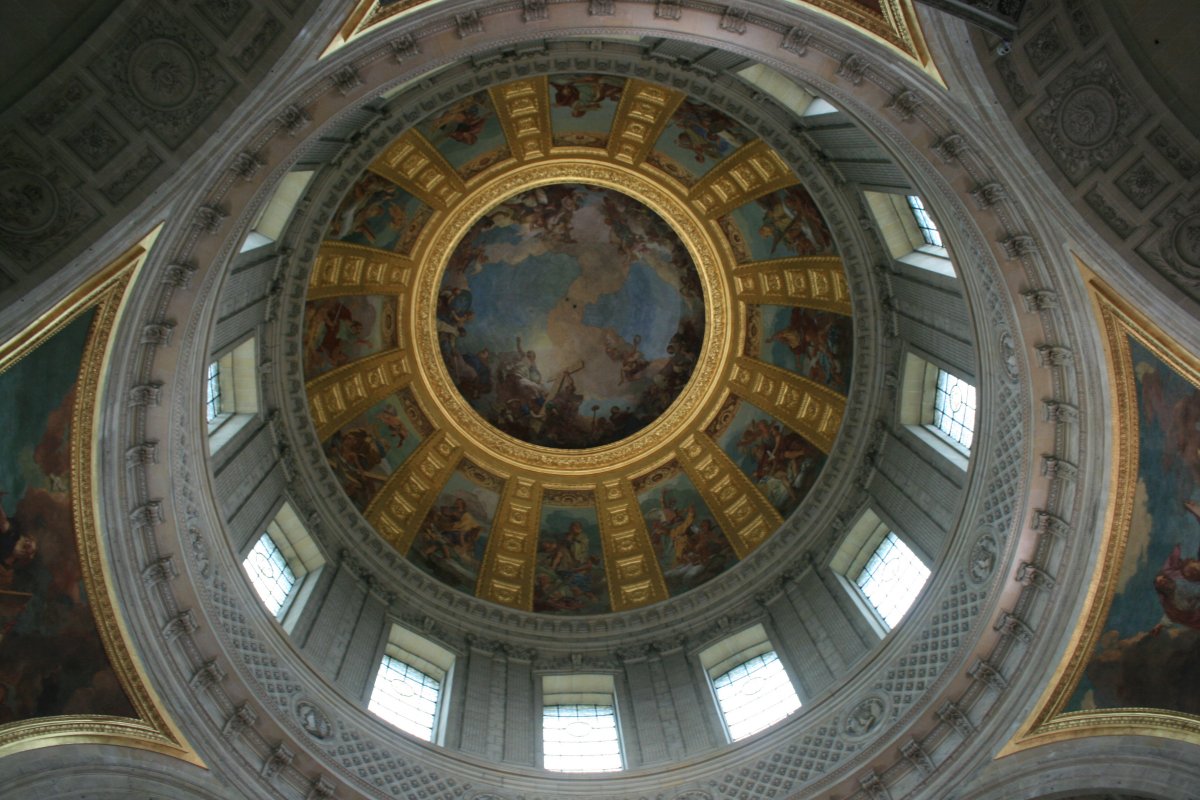
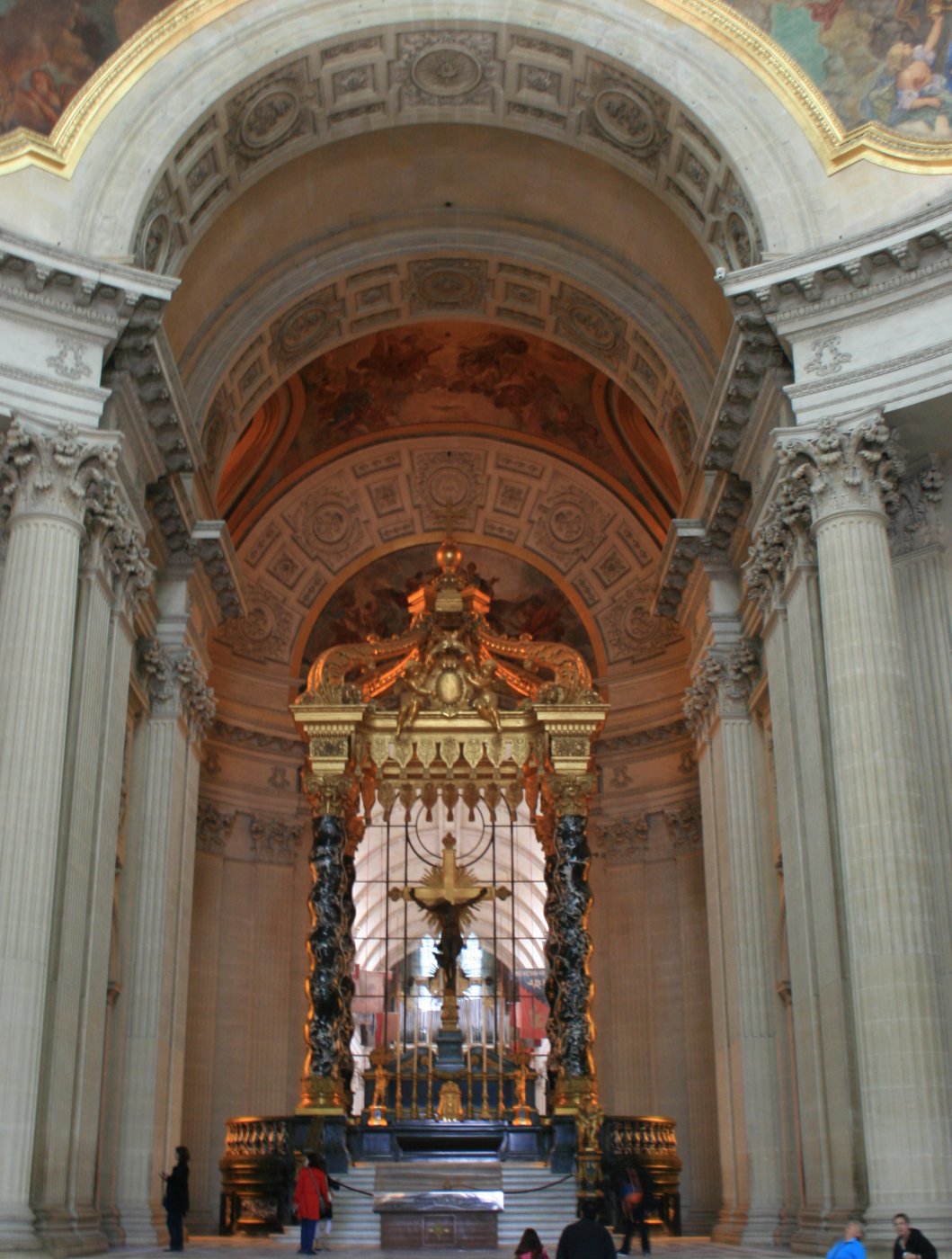
The coffin from lower level. Napoleon was entombed under the dome of the Invalides with great ceremony in 1840. The excavation and erection of the crypt, which heavily modified the interior of the domed church, took twenty years to complete and was finished in 1861. It is called by historian Paul Johnson as "the most sumptuous tomb-memorial since antiquity ... for the greatest soldier who ever lived."
As you recall, Napoleon was ousted in 1815 by the allied armies following the Battle of Waterloo, and exiled to the remote island of Saint Helena in the South Atlantic, where he died six years later, 1821, at the age of 51.
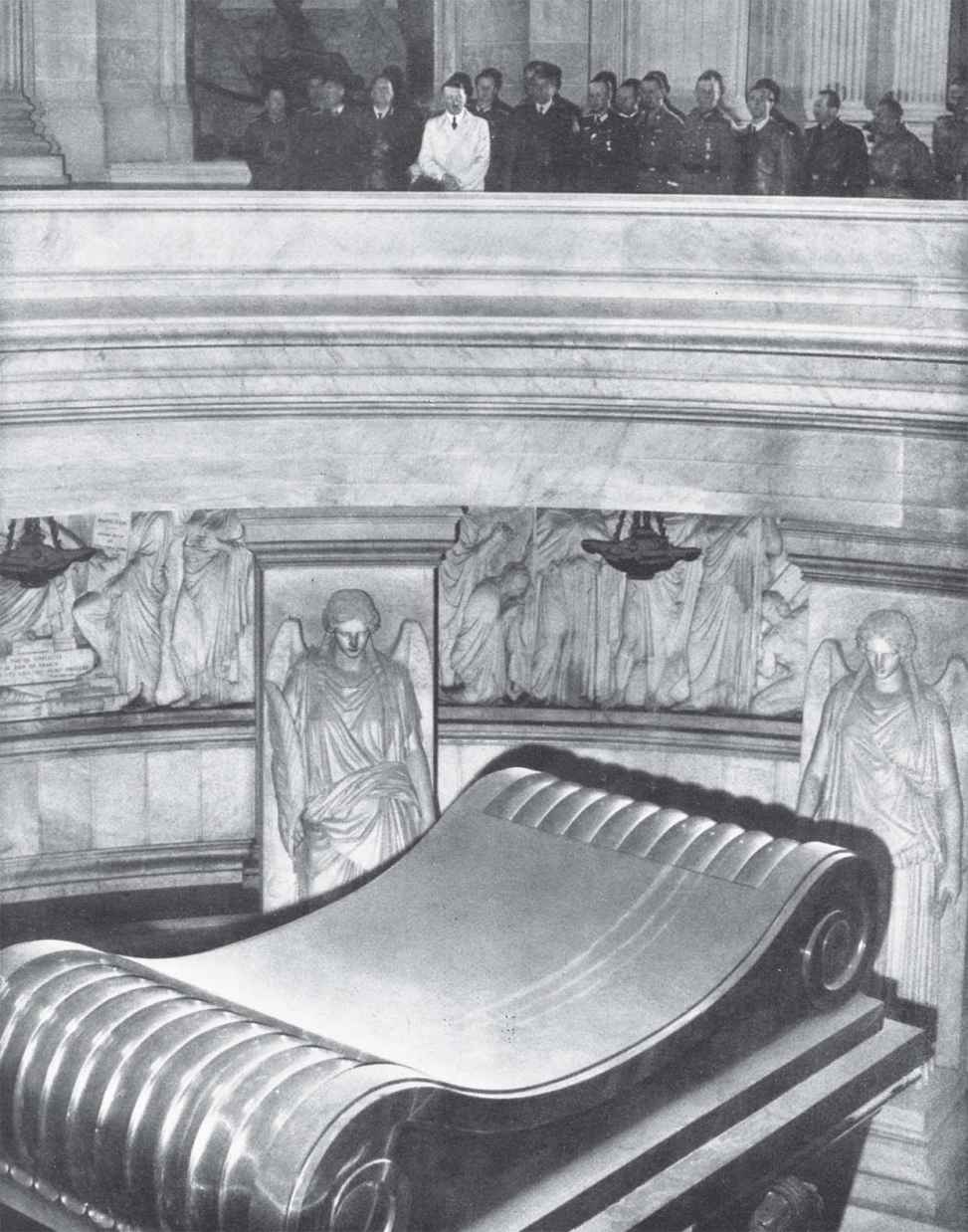
Here is a famous picture of Hitler looking down upon Napoleon's tomb. Hitler visited Paris only once, after the Germans occupied Paris in 1940. "Reportedly, he would gush about the French capital for months afterward. He was so impressed by the city, especially upon visiting Napoleon’s tomb, as both him and Napoleon had been foreigners to the countries they ruled."
In August 1944, the Allies broke out of Normandy and approached Paris. Hitler ordered General Dietrich von Cholitz, who was at that point newly-appointed military governor of Paris, to demolish all Parisian religious and historical monuments, the Eiffel Tower included. Hitler’s words were: “The city must not fall into the enemy’s hand except if lying in complete rubble.”
General von Cholitz disobeyed Adolf Hitler's orders to destroy the city, and instead surrendered it to Free French forces when they entered the city on 25 August. Choltitz later asserted that his defiance of Hitler's direct order stemmed from its obvious military futility, his affection for the French capital's history and culture, and his belief that Hitler had by then become insane. Some called him “the Saviour of Paris.”
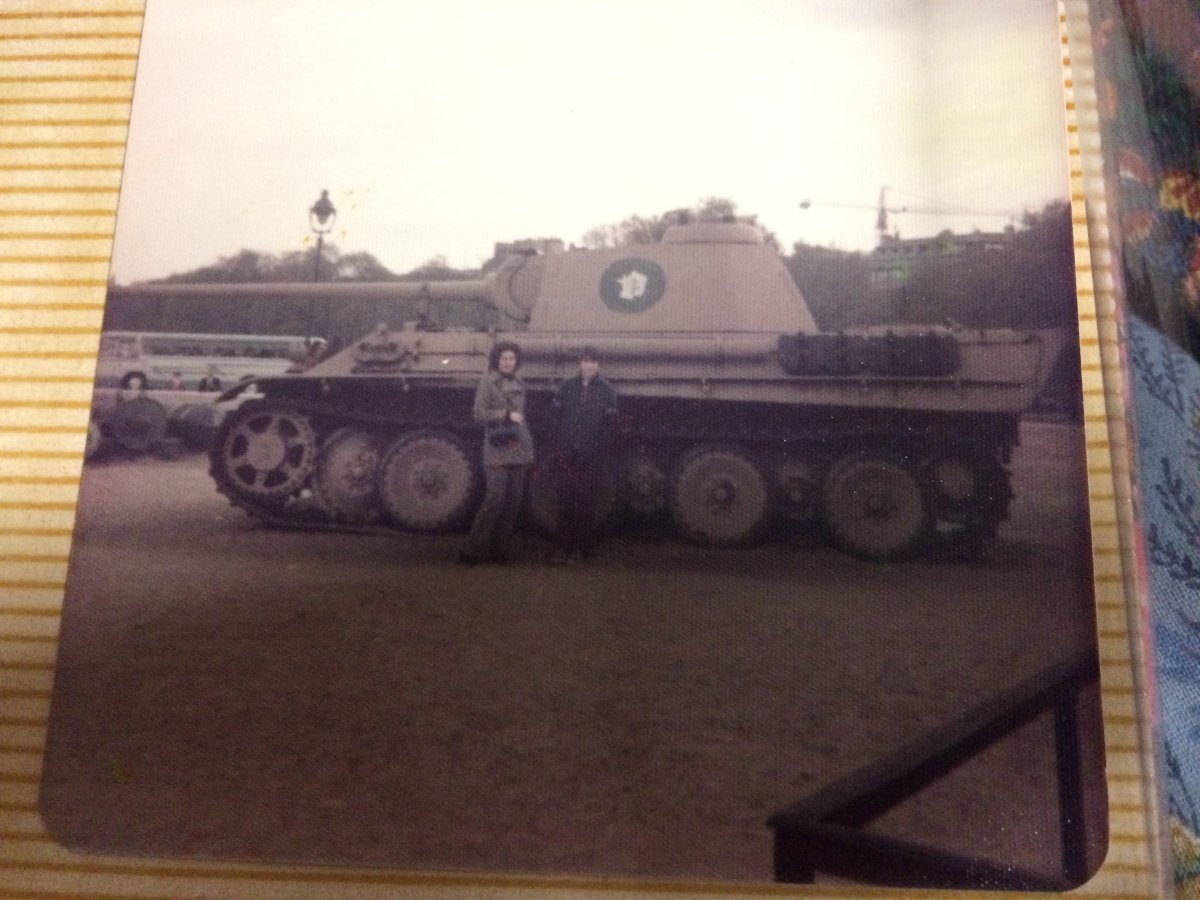
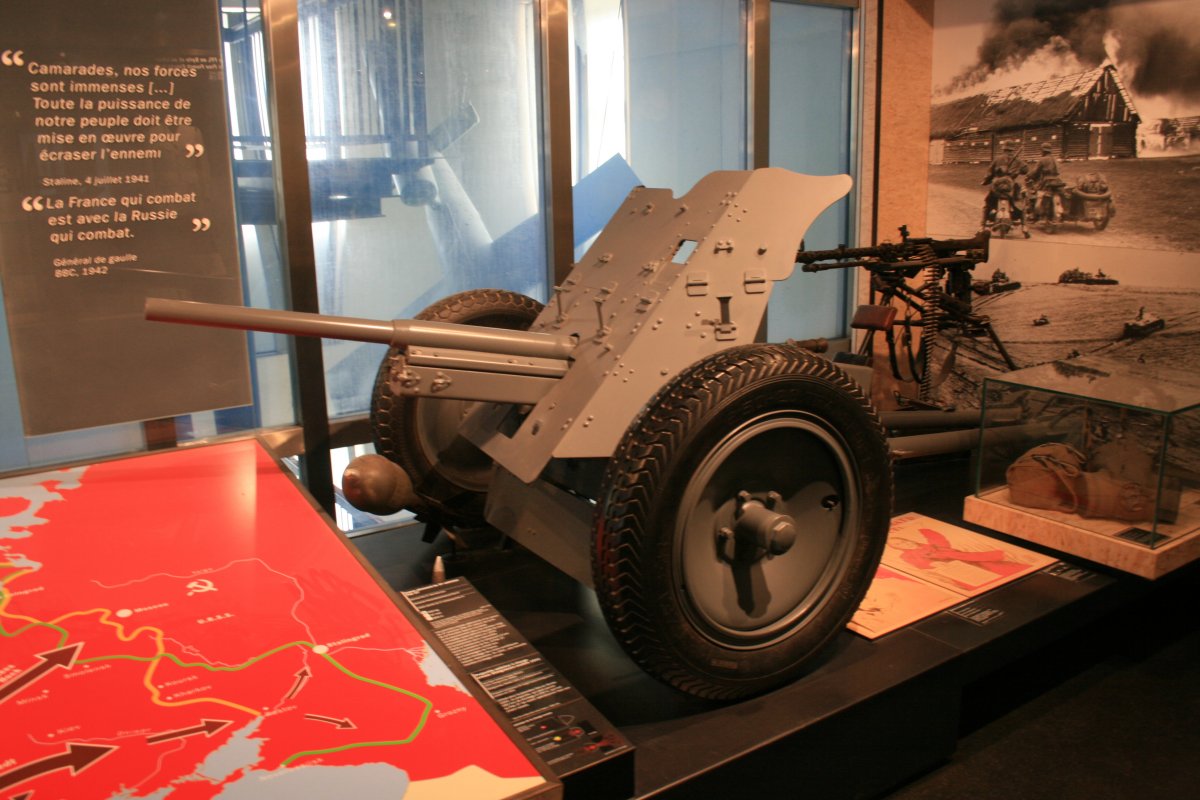
A captured French anti-tank gun used by the Germans against the Soviet Union. There wasn't a lot about World War II in this museum; understandably the French probably don't want to talk about World War II too much.
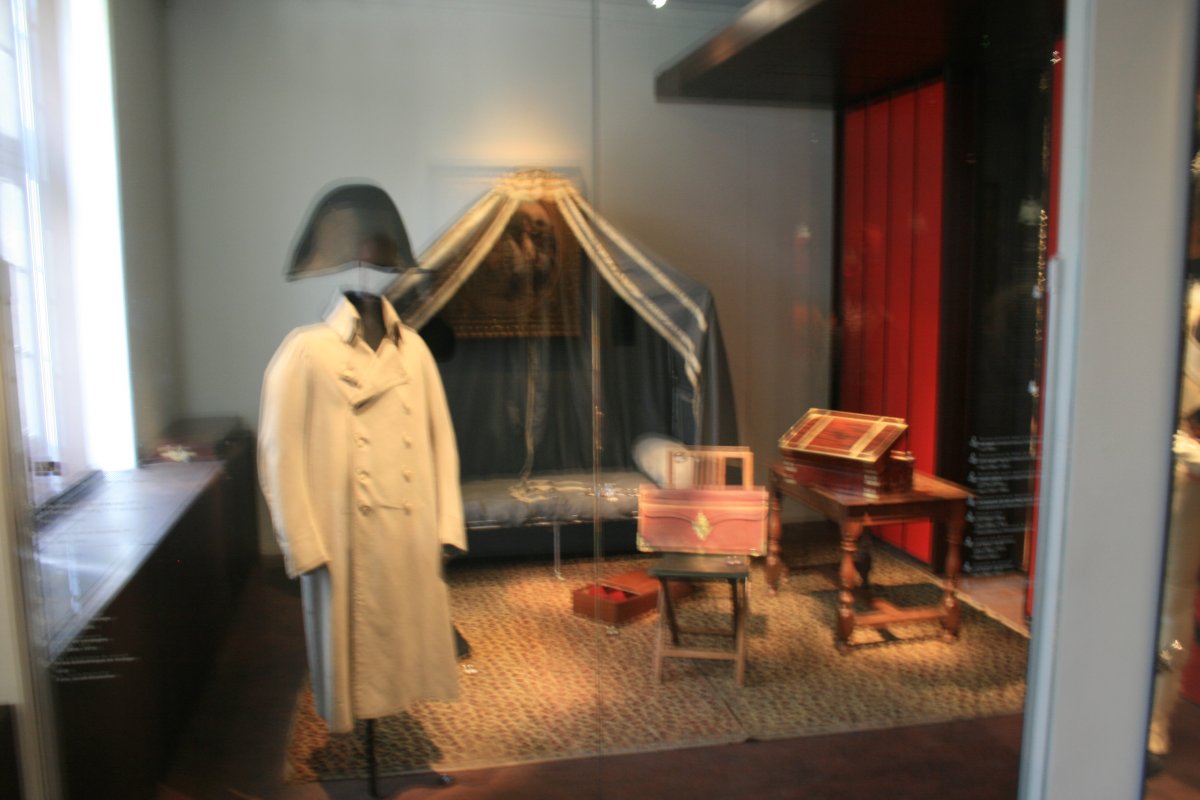
Some of Napoleon's gear while he was campaigning in the field: an overcoat, hat, portable bed, table and chairs. The museum also had an interesting exhibit on Napoleon's life in exile on St. Helena.
The main thing I remember about the Musée de l'Armée was rooms and rooms of French military uniforms especially from the Napoleon era. They were quite elaborate and colorful.